From the CNC production floor
Routed signage explained: materials, carved lettering and dimensional depth
Routed signage starts with a drawing and a substrate. A CNC router follows programmed toolpaths to recess lettering, clear away a background, profile-cut a shape, or machine separate dimensional components. The finished appearance depends as much on depth, tooling, finish and mounting as it does on the artwork.

CNC routing a sign substrate
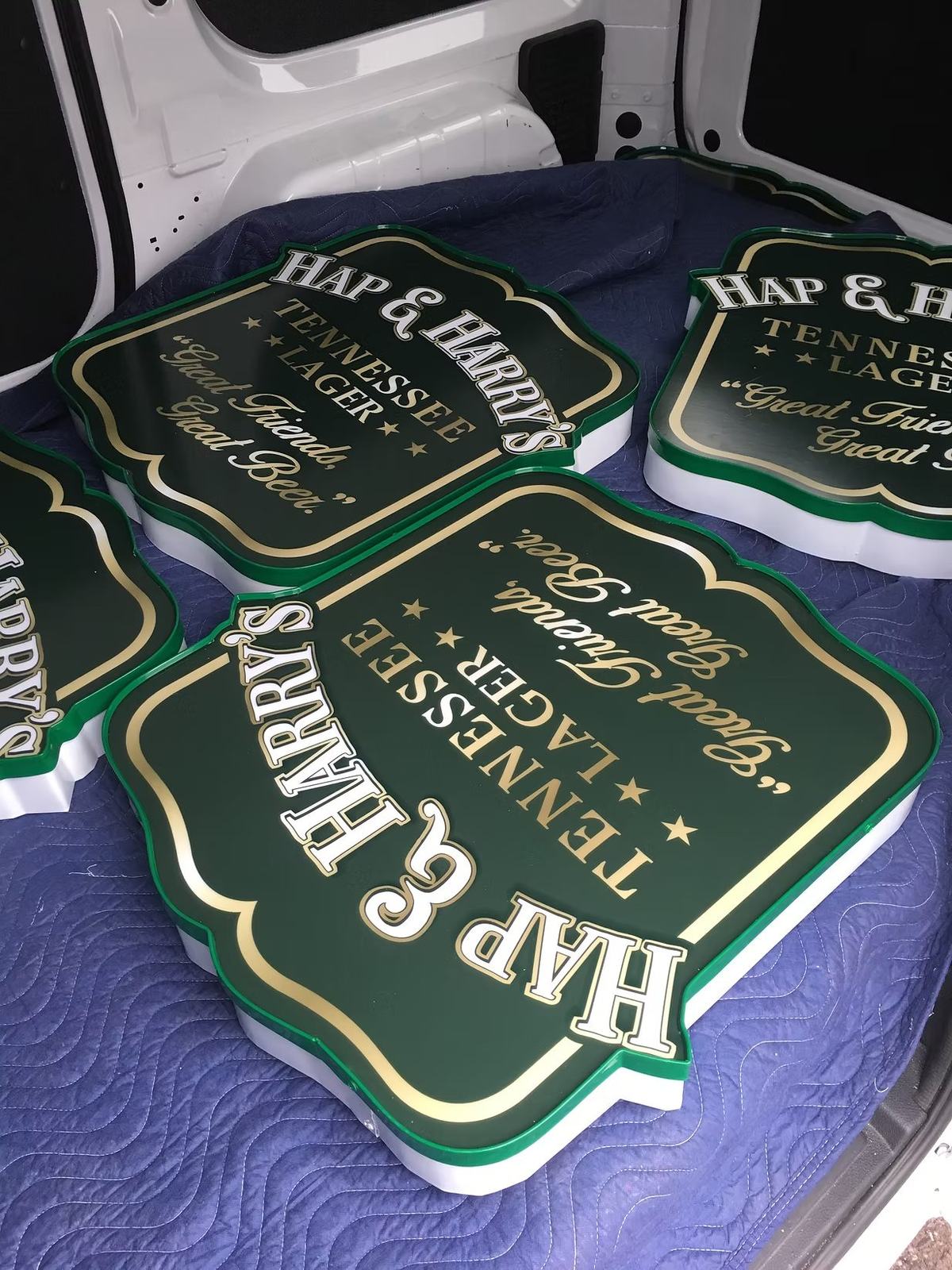
Routed panels in production with raised dimensional lettering

HSC Market routed dimensional sign
Three routed sign methods that look different in person
1. Recessed or V-carved lettering
The router cuts grooves into the panel. V-bits create angled walls and crisp line work where the selected font and stroke widths allow it. Smaller script and close-together lettering require a tooling review; not every logo scales down cleanly. The contrast comes from the color in the cut areas against the face.
2. Raised or base-relief lettering
The machine removes background material while leaving letters, emblems or borders standing proud of the routed field. The remaining depth makes shadows visible even before paint is applied. Broad routed backgrounds also affect machining time, so artwork coverage matters to the quote.
3. Separate dimensional letters and layered components
Some signs call for profile-cut letters mounted onto a routed panel or another backing. This is different from engraving the lettering into one piece. Layering can provide more depth or allow contrasting finishes, but it adds layout, alignment and assembly considerations.

Custom sign panel with raised lettering being finished
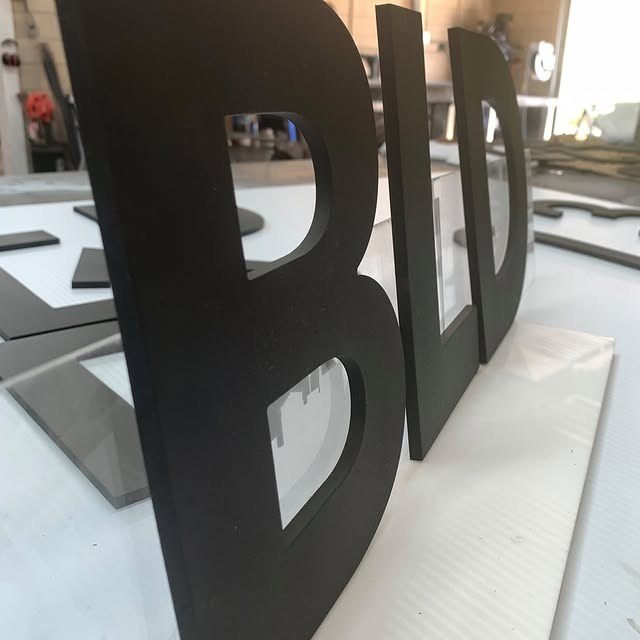
Profile view showing dimensional sign letter depth

Custom routed sign outline showing a shaped substrate
Which material should a routed sign use?
There is no universal best substrate. We select materials according to the installation location, desired detail, exposed edges, finish and structural support. Our common specialty is routed HDU and dimensional fabricated components; other materials may be used for separate lettering or layered features.
| Material | What it's useful for | What to consider |
|---|---|---|
| HDU (high-density urethane) | Exterior carved-look panels, routed backgrounds, shaped signs and raised lettering | Non-structural material; proper backing, attachment and finish are important. Panel thickness and density affect machining choices. |
| Natural wood | Traditional character, grain and carved architectural signs | Moisture movement, wood species and periodic coating maintenance vary by exposure. |
| PVC sheet | Cut profiles, indoor sign parts and some outdoor applications | Thermal movement, thickness, mounting and prolonged sun exposure must be considered. |
| HDPE | Machined plastic signs and panels where a colored solid substrate is useful | Surface energy and thermal movement affect paint, adhesives and mounting. |
| Acrylic | Profile-cut letters, logos and layered face elements | Not a direct substitute for a deep-carved HDU panel; brittle edge details and mounting need attention. |
| Aluminum | Backing, hardware, dimensional letters and structural support components | Requires tools and fastening methods appropriate to metal; often paired with another sign substrate. |
For project-specific guidance, compare our routed sign materials, thickness guide, HDU density considerations and mounting methods.
What affects the cost of CNC routed signage?
More than square footage: the number of machining passes, lettering depth, routed-away background area, shape complexity, two-sided machining, paint colors, assembly and shipping size all matter. Provide overall width and height, whether the sign is single- or double-sided, location, artwork and a picture of the mounting area. We can then recommend a sensible construction rather than guessing from a photo. See the routed sign cost guide.
See the fabrication, not just the finished sign
Actual workshop footage shows why routed signs require more than drawing a shape on a screen. Compare toolpaths, routed surfaces and finishing work in our 18 workshop video previews and explore completed project photographs. Video previews document production work; they are not a claim that every example uses the same material or assembly method.
Questions customers ask before ordering
What's the difference between routed and dimensional signs?
Routing describes a cutting process. Dimensional describes the finished depth. A routed sign can be recessed or raised, and separate CNC-cut components can make dimensional lettering.
Can every logo be V-carved?
No. Very narrow strokes, tiny counters and tight inside corners may need artwork adjustments, a different cutter or separate dimensional lettering.
Is HDU the same as wood?
No. HDU is a machinable urethane foam board that can take a carved or faux-wood finish. Unlike natural timber, it has no grain and does not behave structurally like wood.
Is routed HDU suitable outside?
Properly specified and finished HDU is used for exterior sign panels. Mounting, coating system, wind exposure and sign support must be considered for the installation.
Do you need vector artwork to request a quote?
Vector files are helpful for final fabrication, but you can send a picture or logo to discuss the design and feasibility before production artwork is finalized.
Have artwork or a sign you want reproduced?
Send the overall dimensions, application, preferred finish and an image. We'll review the routing and construction requirements before quoting.
Request a routed sign quote →More technical resources: our manufacturing process, artwork preparation, routed lettering and custom shapes.